
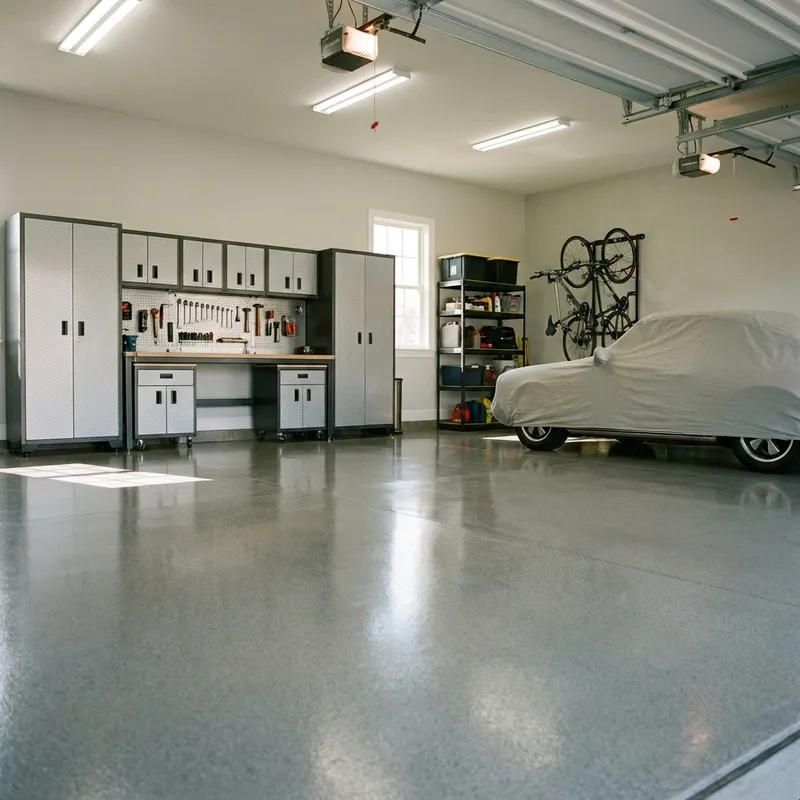
Concrete Garage Floors in Erie, PA
Erie Superior Concrete pours and replaces concrete garage floors throughout Erie, PA. Erie garage floors face one of the harshest concrete environments possible — vehicles tracking in road salt and snow melt from every winter drive, freeze-thaw exposure through the attached garage thermal boundary, and regular vehicle load cycling.
We pour Erie garage floors with proper mix design for salt exposure, sealed after full cure to protect from chloride penetration, and with control joints placed to manage seasonal movement. A garage floor installed correctly in Erie County will last decades — one installed with generic residential specs will spall and pit within a few years.
Get a Free EstimateWhy Erie Garage Floors Fail Early
The primary cause of Erie garage floor deterioration is deicing salt carried in on vehicle undercarriages. Road salt (calcium chloride and magnesium chloride) is highly corrosive to concrete — it lowers the freezing point of water and drives moisture deep into the concrete matrix where it freezes and expands, creating the surface scaling and pitting that plagues Erie garages.
Low-quality concrete poured with a high water-to-cement ratio is especially vulnerable — the excess water creates more voids in the cured concrete that salt can penetrate. We pour garage floors with a strict water-to-cement ratio, proper air entrainment, and a curing period before we seal. The right spec from day one eliminates most of the failure mechanisms we see in Erie garage floors.
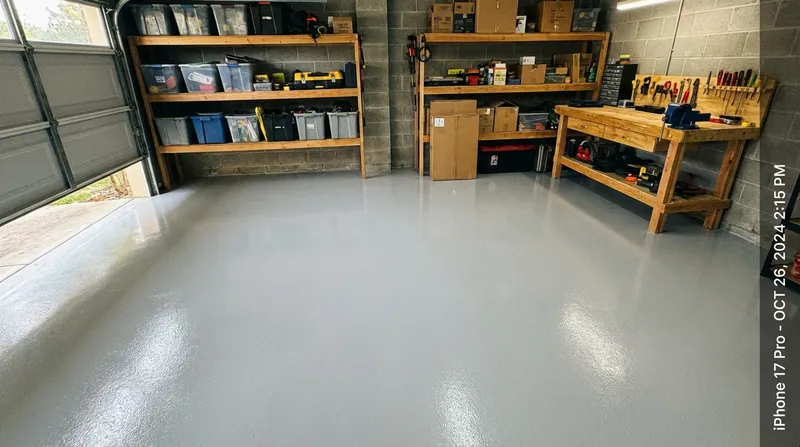
New Garage Floor Pours
For new construction or complete garage floor replacement, we remove existing concrete, prepare the subbase with proper compaction, install vapor barrier for attached garages, and pour with 4,500 PSI air-entrained concrete. The floor is troweled smooth with a light broom or swirl finish for traction, then saw-cut for control joints within 24 hours.
Garage Floor Sealing
Penetrating silane/siloxane sealers are the best protection for Erie garage floors — they penetrate into the concrete matrix and chemically react to block moisture and chloride penetration, rather than forming a surface film that wears off. We apply sealer after full 28-day cure for new floors, and can seal existing floors that are structurally sound but unprotected.
Apron & Transition Replacement
The garage apron — the concrete transition between the garage floor and the driveway at the overhead door — is often the first section to fail. It sees concentrated salt exposure from vehicle wheels and is exposed to full freeze-thaw cycling. We replace deteriorated apron sections as a standalone project or as part of a larger driveway or garage floor replacement.
Level & Flatness
Garage floors should slope slightly toward the door (1/8 to 1/4 inch per foot) to drain melt water out rather than pooling inside. We establish correct grade before pouring and screed to achieve a flat, consistently sloped surface. Puddles that persist inside a garage after vehicles pull in indicate the floor wasn't sloped correctly — we fix this on replacement projects.
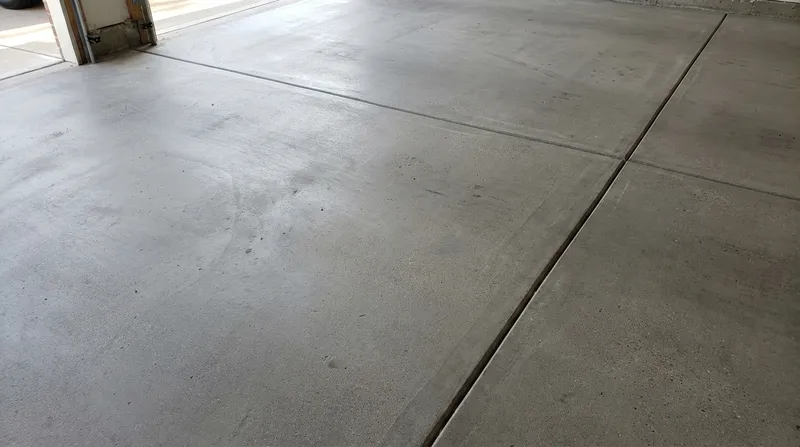
What to Expect from a Garage Floor Replacement
A full garage floor replacement in Erie is typically a 2–3 day project: one day for demo and subbase prep, one for the pour, and the floor needs to cure 7 days before vehicles return. We coordinate the schedule with you so your garage is accessible as quickly as possible.
After the pour, we recommend no vehicles for 7 days and advise waiting the full 28-day cure period before applying sealer. We also recommend not using calcium chloride or magnesium chloride deicers on the garage floor — use sand for traction instead, particularly in the first year. These details extend floor life significantly.