
Exposed Aggregate Concrete in Erie, PA
Erie Superior Concrete installs exposed aggregate concrete throughout Erie, PA for driveways, patios, walkways, and pool decks that want a distinctive natural texture. Exposed aggregate reveals the stone and pebble material within the concrete mix — the result is a slip-resistant, visually interesting surface that looks natural rather than manufactured.
In Erie's climate, exposed aggregate concrete requires proper sealer application and maintenance to perform well over time. The texture that makes it slip-resistant also collects salt and debris — we discuss the realistic maintenance picture alongside the aesthetic appeal for every exposed aggregate project we take on in Erie.
Get a Free EstimateHow Exposed Aggregate is Made
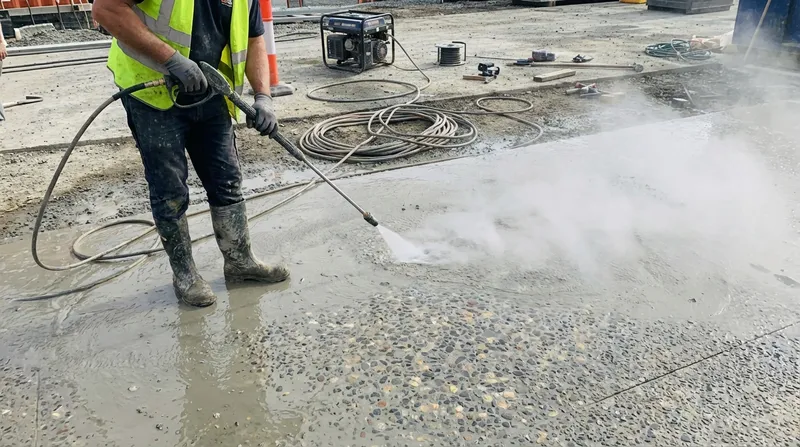
Exposed aggregate is created by washing or brushing the concrete surface shortly after the pour — when the concrete has set enough to hold its shape but the cement paste on top is still workable. A surface retarder is applied at pour time to delay the top paste from hardening, while the concrete below sets normally. The retarded surface paste is then washed away, revealing the decorative aggregate beneath.
The aggregate used can be the natural stone in the concrete mix, or seeded decorative aggregate (colored pebbles, quartz, river stone) can be embedded into the fresh concrete before exposure. Seeded aggregate gives more control over the final appearance — we offer both methods depending on the client's aesthetic goals and budget.
Natural Traction Surface
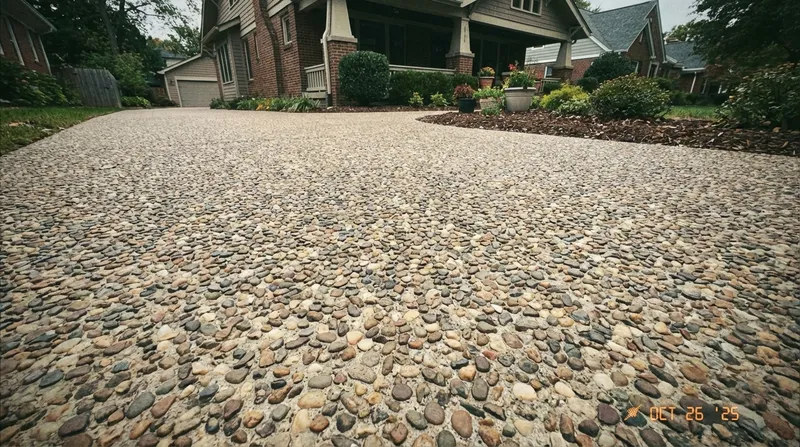
Exposed aggregate provides significantly better slip resistance than smooth troweled concrete — the exposed stone surface maintains grip even when wet. This makes it popular for pool decks, walkways, and driveways in Erie where wet and icy surfaces are a regular winter hazard. The texture also hides small surface imperfections better than a smooth finish.
Aggregate Selection
We offer natural aggregate exposure using the stone in the concrete mix, or seeded decorative aggregate in river pebble, quartz, or colored stone varieties. Aggregate size affects the final texture — smaller pea gravel creates a finer, more uniform surface while larger stones create more visual depth. We show samples and discuss the look before committing to a mix design.
Sealing for Erie's Climate
Exposed aggregate must be sealed to perform well in Erie's salt and freeze-thaw environment. We apply acrylic or polyurethane sealers that penetrate the aggregate texture and protect the cement paste between stones from chloride penetration. Resealing every 2–3 years maintains protection and keeps the aggregate looking fresh — we discuss the maintenance schedule with every client.
Driveway Applications
Exposed aggregate driveways are popular in Erie for their distinctive appearance and lower maintenance compared to stamped concrete — the exposed stone surface doesn't show wear patterns or color fade as obviously as stamped and sealed concrete. We pour exposed aggregate driveways with the same air-entrained mix and frost-depth preparation as all our Erie driveways.
Exposed Aggregate vs. Stamped Concrete in Erie
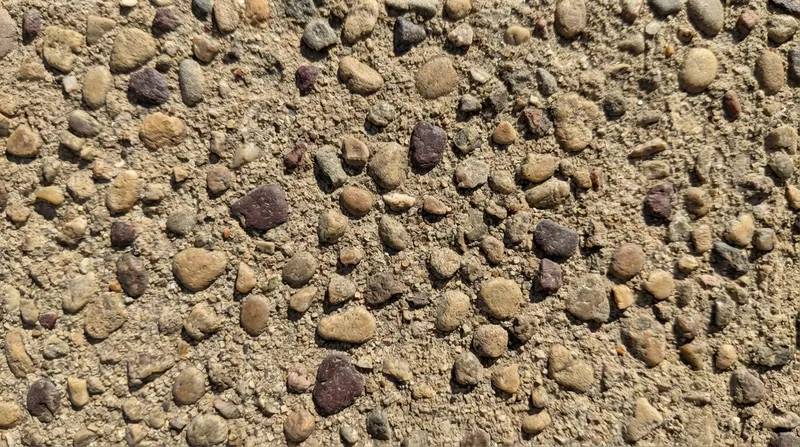
Both are decorative concrete options, but they serve different aesthetics and have different maintenance requirements in Erie's climate. Stamped concrete mimics stone or brick patterns and is best for patios and lower-traffic areas. Exposed aggregate has a more natural, textured look and holds up better under heavy vehicle traffic on driveways.
From a maintenance perspective, exposed aggregate is generally lower-maintenance in Erie's harsh winters — the texture is intrinsic to the concrete, not dependent on a surface sealer to create the pattern effect. When sealer wears on exposed aggregate, the concrete still looks and functions fine until resealing. When sealer wears on stamped concrete, the pattern looks dull and faded. For driveways and high-traffic areas, we often recommend exposed aggregate over stamped.