
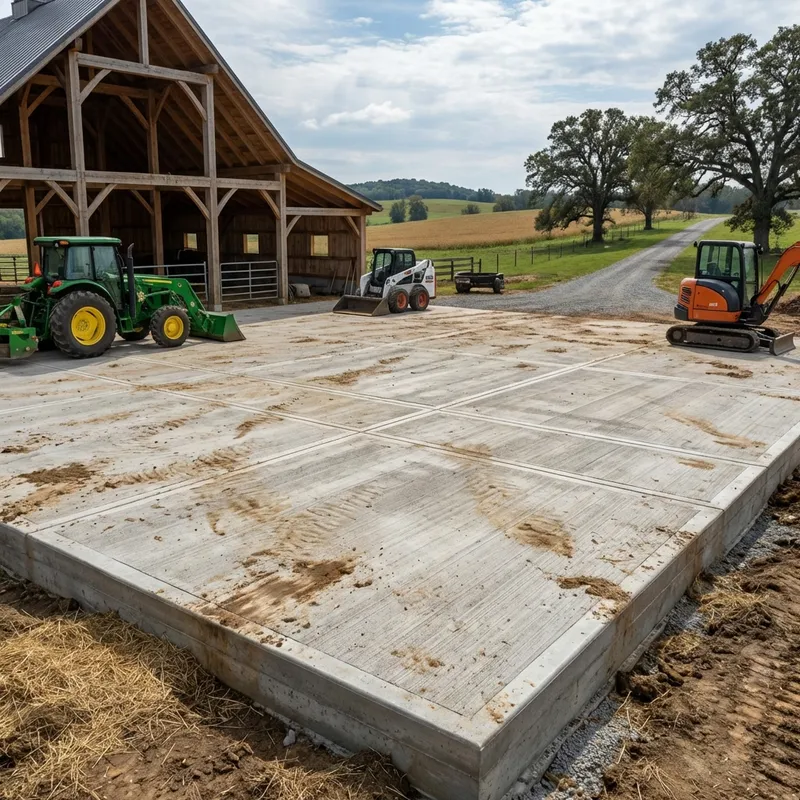
Concrete Barn Pads & Agricultural Slabs in Erie, PA
Erie Superior Concrete pours concrete barn pads, equipment storage slabs, feedlot aprons, and agricultural concrete throughout Erie, PA and Erie County's rural townships. Farm concrete must handle heavier loads, more aggressive chemical exposure from manure and agricultural chemicals, and Erie's full freeze-thaw cycle without the maintenance budget of commercial properties.
We understand agricultural concrete requirements. Barn floors need texture for livestock footing, drainage slopes for washdown, and resistance to the acidic environment created by manure and urine. Equipment pads need thickness and reinforcement for heavy machinery. We spec and pour for the actual agricultural use — not residential specs on a larger footprint.
Get a Free EstimateAgricultural Concrete in Erie County
Erie County's rural townships — Springfield, Waterford, McKean, Girard, and others — have active agricultural properties that need concrete for barns, equipment storage, silage areas, and feedlot facilities. These applications require different specs than residential or commercial concrete: heavier reinforcement, acidic-environment resistant mix designs, and drainage planning appropriate for agricultural washdown.
We work with property owners and farmers on large-footprint agricultural slabs that require coordinated concrete delivery and larger pour crews. Agricultural concrete pours are often multiple truck loads with tight timing requirements — we manage that coordination to ensure consistent quality across the full slab.
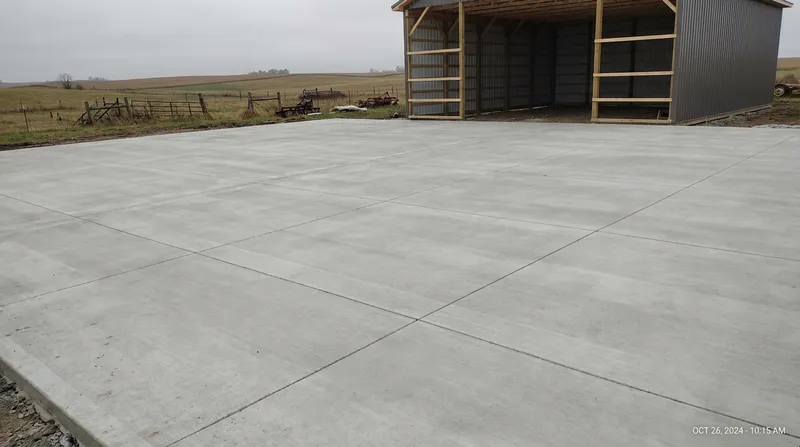
Barn Floor Slabs
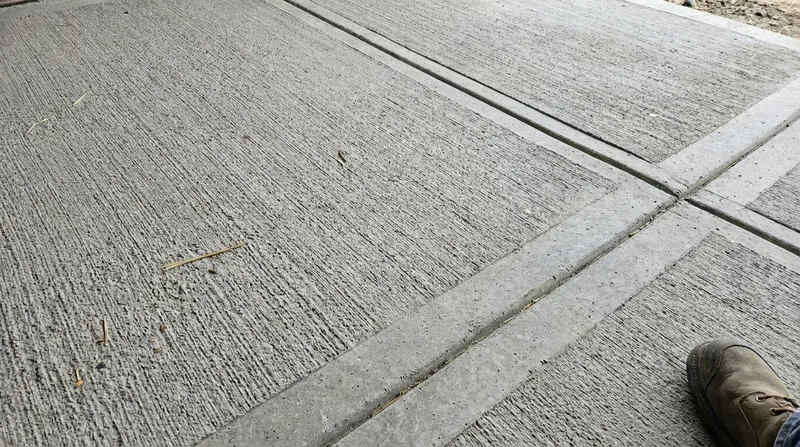
Barn floor slabs for livestock facilities need broom or grooved finishes for animal footing, drainage slopes toward gutters or collection points, and concrete mix designs that resist the acidic pH environment from manure. We typically pour barn floors 5–6 inches thick with heavier reinforcement and a higher strength mix than standard residential work.
Equipment Storage Pads
Farm equipment — tractors, combines, wagons, round baler — is heavy. Equipment storage pads need 6 inches minimum thickness with rebar reinforcement to handle both the static weight and the dynamic loading from moving equipment. We also plan for adequate drainage to prevent water from ponding under stored equipment.
Feedlot Aprons & Pads
Feed aprons, bunker silo faces, and manure storage surrounds require concrete that can handle both the chemical environment and heavy equipment operations. We consult on drainage planning for feedlot concrete to help meet Pennsylvania DEP requirements for runoff management from agricultural areas.
Large Pour Coordination
Agricultural slabs are often 5,000+ square feet — well beyond typical residential pour size. Managing multiple concrete truck deliveries, maintaining consistent mix hydration, and finishing a large pour before the concrete sets requires experienced crews and tight coordination. We've managed large agricultural pours throughout Erie County and know how to execute them correctly.
Built for Erie County Farm Conditions
Erie County's agricultural areas experience the same harsh climate as the city — 40-inch frost depth, 100+ inches of annual snow, heavy precipitation, and clay soils with high moisture retention. Agricultural concrete poured with inadequate subbase or insufficient thickness heaves and cracks quickly under Erie County's conditions.
We bring commercial project management to agricultural concrete work. We schedule concrete deliveries, manage crew size to the pour scope, and ensure work progresses efficiently to minimize disruption to farm operations. Your operation doesn't stop because you're building new infrastructure — we plan around it.