
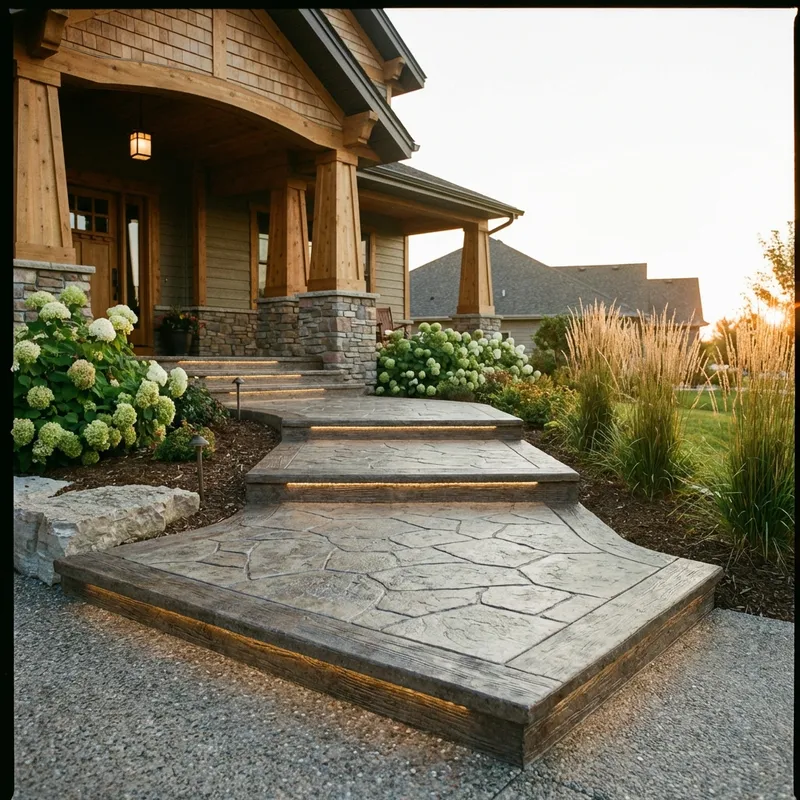
Concrete Stairs & Steps in Erie, PA
Erie Superior Concrete forms and pours concrete stairs and steps throughout Erie, PA. From front entry steps to full exterior staircases connecting grade changes, we build concrete steps that meet code, stay put through Erie winters, and provide safe footing in wet and icy conditions.
Concrete steps in Erie fail for predictable reasons — footings above frost line, inadequate reinforcement, and mix designs that can't withstand freeze-thaw cycling. We address all three: footings at proper depth, steel reinforcement throughout, and 4,000+ PSI air-entrained concrete. Steps built right don't heave, crack, or tip.
Get a Free EstimateWhy Erie Concrete Steps Fail — and How We Fix It
The most common failure mode for Erie concrete steps is heaving — the entire stair unit tilts or rises due to frost action beneath the footing. This happens when the footing isn't deep enough to get below the frost line, or when drainage allows water to accumulate under the structure and freeze. We pour step footings to the same depth as foundation footings — 40 inches in Erie County.
The second common failure is surface deterioration from deicing salt — steps receive heavy salt application because they're a fall-hazard priority area. We use air-entrained concrete and recommend penetrating sealers applied annually to protect step surfaces from chloride penetration. We also advise clients to switch to sand-based traction products on steps rather than calcium chloride.
Entry Steps & Stoops
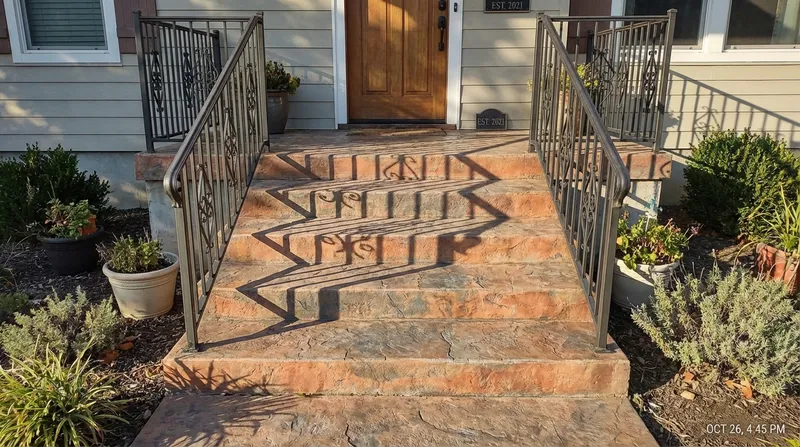
Front entry steps are a critical safety element — they must provide safe footing year-round and remain stable through Erie's freeze-thaw cycles. We form entry steps with proper riser height (7–7.5 inches) and tread depth (11 inches minimum) meeting PA code, with broom finish for traction and integration with landing pads or porches.
Retaining Wall Stairs
Stairs built into or adjacent to retaining walls require careful coordination between the wall structure and the stair footing. We design integrated stair/wall systems where the stair and wall work together structurally, rather than independent elements that can move relative to each other and create gaps, trip hazards, or drainage problems.
Deck & Porch Transitions
Concrete steps transitioning from wood decks or covered porches down to grade need proper isolation from the deck structure — concrete and wood move at different rates with temperature and moisture changes. We install isolation joints and design drainage away from the transition point to prevent water accumulation and freeze-thaw damage at the connection.
Decorative Step Finishes
Beyond standard broom finish, we offer exposed aggregate, stamped tread patterns, and brushed finishes for entry steps where appearance matters. Decorative step finishes must still provide adequate traction — we balance aesthetics and safety for every decorative step project, with Erie's wet and icy conditions in mind.
Step Replacement vs. Repair
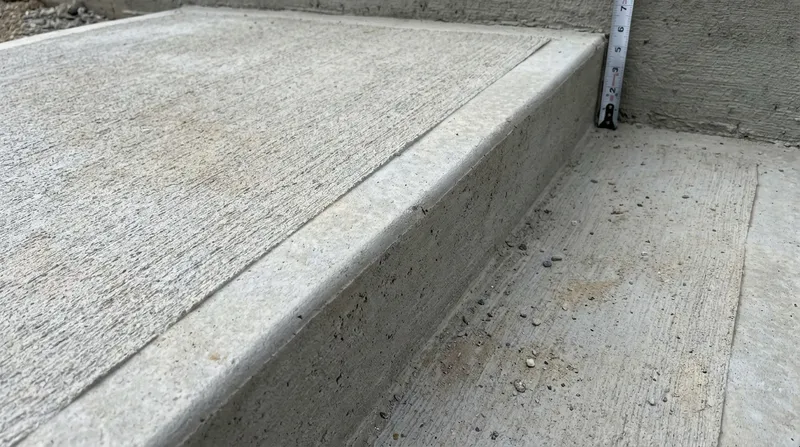
Heaved or tilted steps almost always require full replacement — pushing a heaved step unit back to level and grouting it in place is a temporary fix that fails again within 1–2 winters if the underlying footing issue isn't corrected. We replace the full stair unit with proper frost-depth footings so the problem is actually solved.
Surface spalling and edge chipping on sound steps can sometimes be repaired with polymer-modified repair mortars. We assess whether the underlying structure is sound before recommending surface repair — a step unit that's heaved or has structural cracking needs replacement, not cosmetic patching.